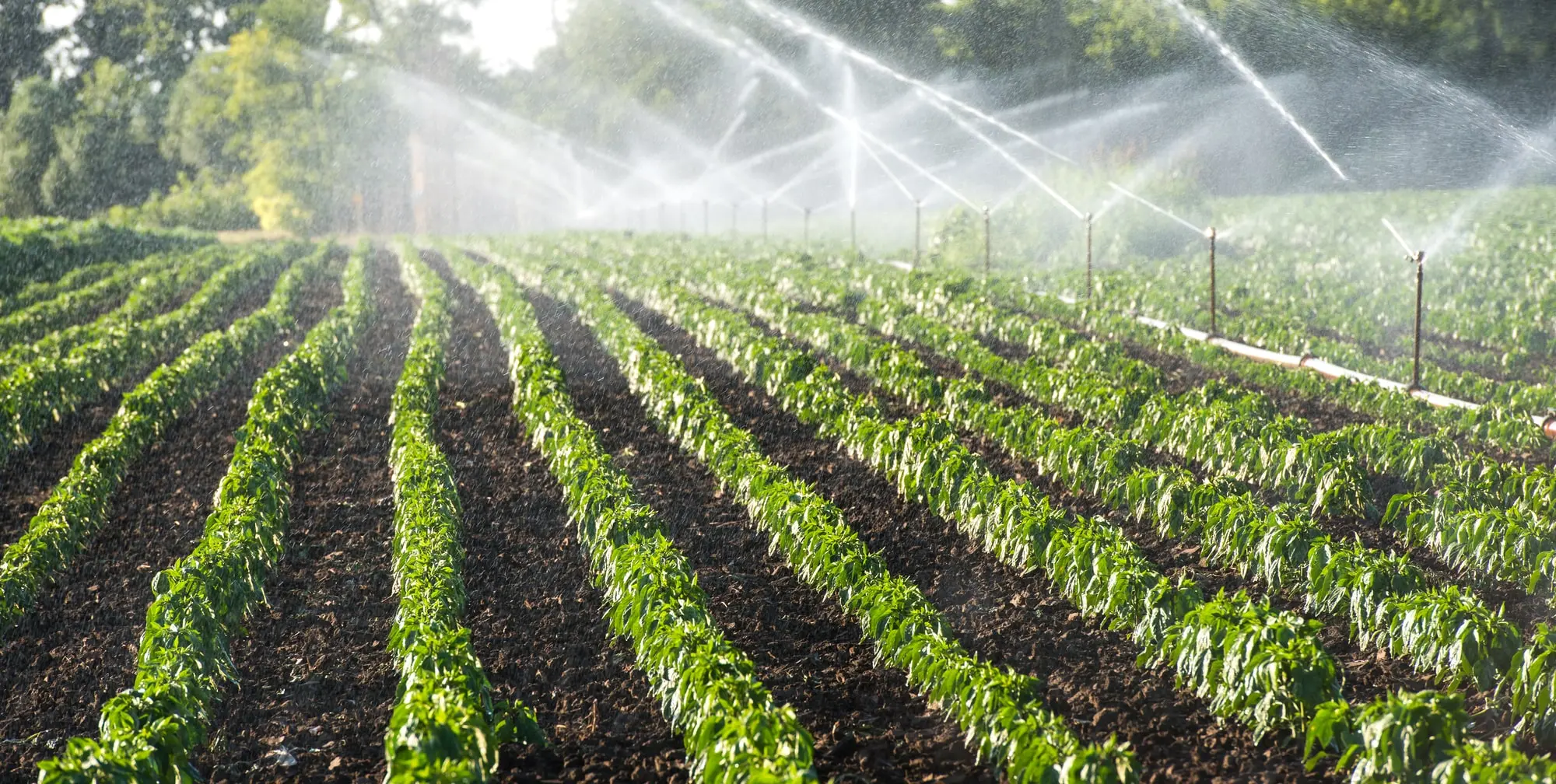
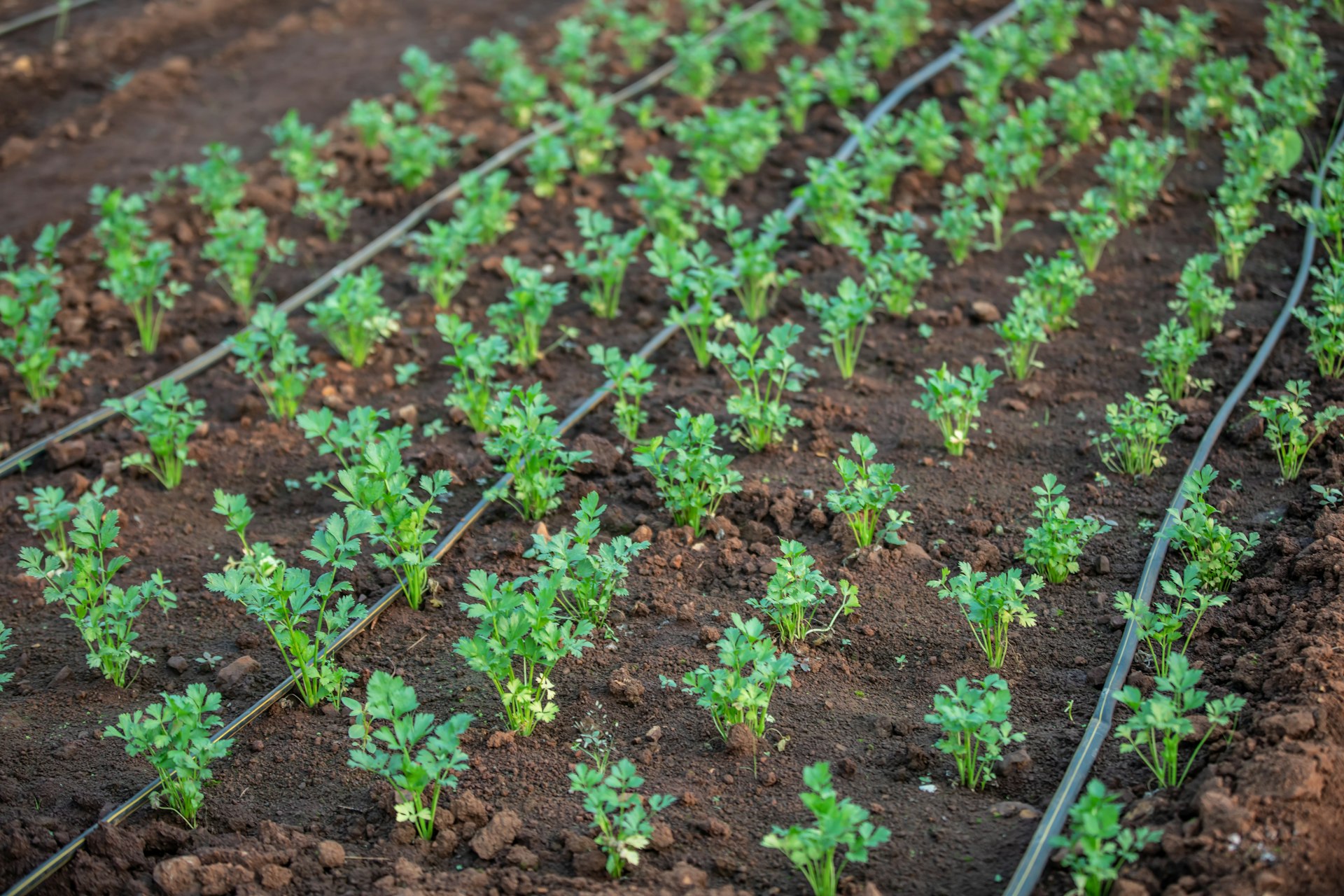
Sri Lanka's agriculture has depended on flood and furrow irrigation for over two thousand years — a testament to our ancient tank cascade systems, but a poor match for today's realities of erratic monsoons, rising input costs and labour shortages. Drip irrigation delivers water directly to each plant's root zone, drop by drop, and it is quietly transforming how the island grows everything from tea and coconut to chilli, banana and export vegetables.
This guide covers the full picture: how a drip system actually works, what it saves, which crops repay the investment fastest, the engineering details — filtration above all — that decide whether a system lasts two years or twenty, and how a professional project unfolds from site survey to handover.
How drip irrigation actually works
A drip system moves water from your source — a well, tank, stream or mains supply — through a filtration unit, into a network of main and sub-main pipes, and finally through thin lateral lines fitted with emitters. Each emitter releases a slow, measured flow (typically 2–8 litres per hour) right at the plant's base. The soil surface between rows stays dry, which is exactly the point: no evaporation losses, no water feeding the weeds, no runoff carrying your fertiliser away.
Below ground, the agronomy is just as important as the hardware. Because emitters wet a bulb-shaped zone around each plant, roots concentrate where water and nutrients are, developing a dense, efficient root system. Emitter spacing and flow rate are chosen to match soil type: sandy soils wet a narrow, deep bulb and need closer spacing; clay soils spread water wider and tolerate fewer emitters per metre.
The savings are real — and measurable
Compared with flood irrigation, well-designed drip systems routinely cut water consumption by 40–60% while improving yields. On our conversion projects, such as the Thilaka Watte Estate upgrade in Kurunegala, the shift from flood to a hybrid micro-sprinkler and drip network drastically reduced consumption while making crop growth visibly more uniform. Uniformity matters commercially: even watering means even ripening, which means a higher percentage of your harvest reaches market grade.
The savings stack up across four separate lines:
- Water — 40–60% less pumped, which matters even for "free" sources once you count pumping energy.
- Energy — every litre not pumped is diesel or electricity not burned; drip also runs at lower pressures than sprinkler systems.
- Fertiliser — nutrients delivered to the root zone instead of broadcast across wet fields cuts fertiliser bills, typically by 20–30% when fertigation is used.
- Labour — automated valves and scheduling replace hours of channel management and hose dragging every single day.
Which Sri Lankan crops benefit most?
- Vegetables & chilli — fast payback, dramatic uniformity gains, and drier foliage means less fungal disease pressure.
- Banana & papaya — heavy water users that respond strongly to consistent root-zone moisture.
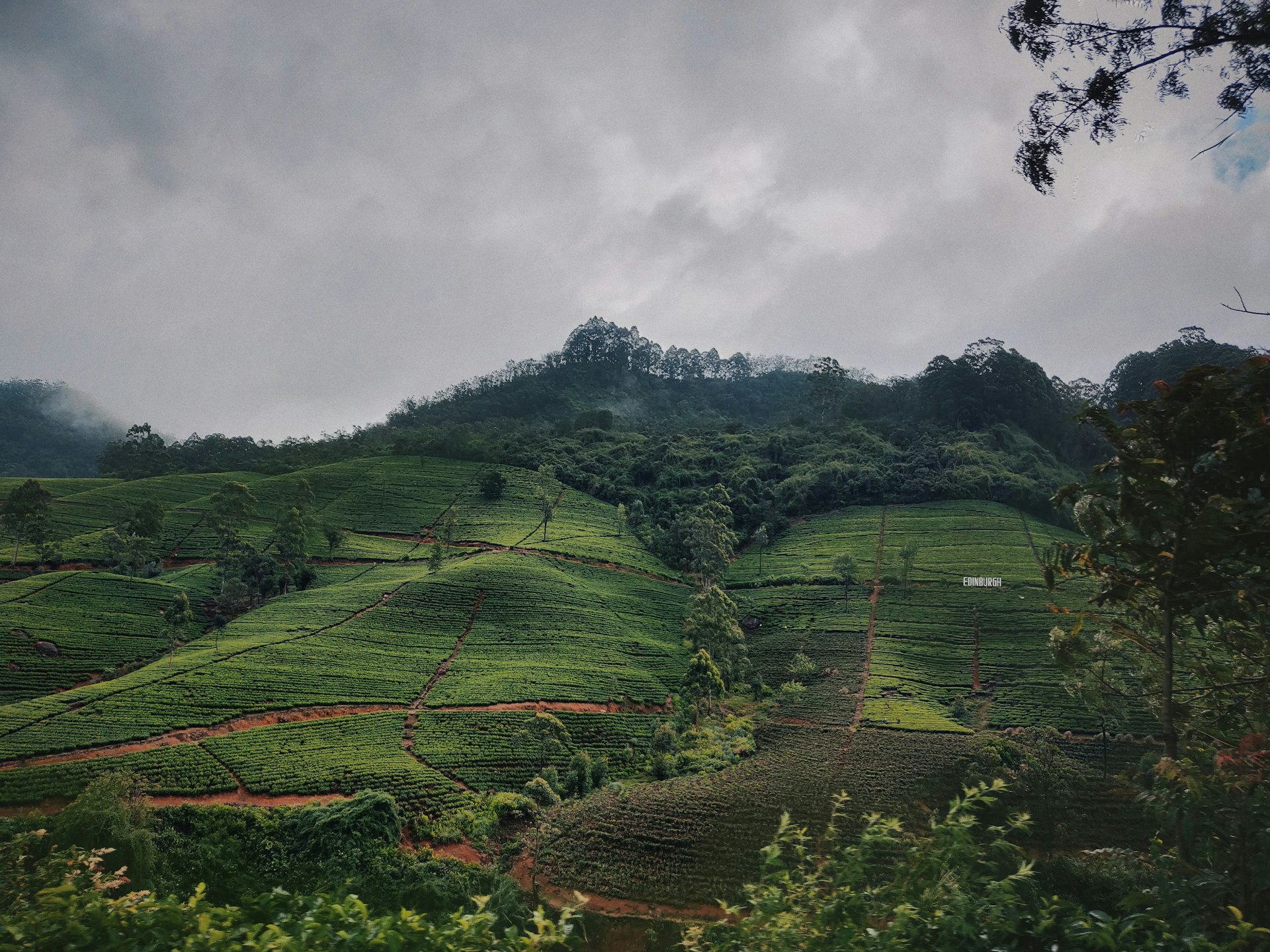
- Tea — young tea and drought-prone sections benefit from supplementary drip, protecting the bushes that take years to establish.
- Coconut — basin drip arrangements sustain palms through dry spells that would otherwise cost a season's nut yield.
- Fruit orchards — mango, guava, dragon fruit and citrus all thrive on regulated deficit irrigation that drip makes possible.
- Protected agriculture — inside greenhouses and poly-tunnels, drip with fertigation is simply the standard; nothing else offers the same control.
Fertigation: feeding through the lines
Once drip lines are in the field, they can carry more than water. Fertigation systems inject soluble fertiliser directly into the irrigation stream, delivering nutrients in small, frequent doses exactly where roots can use them. At Wickramasuriya Estate in Matara, integrating fertigation cut fertiliser waste, reduced labour costs and measurably accelerated growth cycles. For most commercial growers, fertigation is where drip stops being a water-saving tool and becomes a yield-building one.
Three injection technologies dominate, and the right one depends on scale and precision requirements:
| Injector type | How it works | Best suited to |
|---|---|---|
| Venturi injector | Pressure differential draws solution into the line; no moving parts | Smallholdings and single-zone systems on a budget |
| Fertiliser tank | Sealed tank in a bypass; concentration declines through the cycle | Field crops where exact dosing is less critical |
| Dosing pump | Electric or hydraulic pump injects at a precisely controlled rate | Commercial estates, greenhouses and export production |
The part most suppliers skip: filtration
The single most common reason drip systems fail in Sri Lanka is inadequate filtration. Local surface water carries silt, algae and organic matter that will clog emitters within a season if it isn't removed. A properly specified system pairs the right filter technology with your actual water source:
- Screen filters — the workhorse for well and mains water carrying fine sand and grit.
- Disc filters — layered grooved discs that trap both particles and some organic matter; the all-rounder for mixed-quality sources.
- Media (sand) filters — deep-bed filtration for tank and stream water heavy with algae and organics; essential for most surface sources in Sri Lanka.
- Hydrocyclones — spin heavy sand out of borehole water before it reaches the fine filters.
Serious installations combine stages — a hydrocyclone or media filter doing the heavy lifting, with disc or screen filters as the final guard — and include pressure gauges either side of each stage so a rising differential tells you it's time to flush. This is engineering, not shopping: it's why we insist on a water quality assessment before quoting any system.
What does a drip system cost in Sri Lanka?
Honest answer: it depends on factors you control, and any supplier quoting a per-acre price before seeing your land is guessing. The five biggest cost drivers are:
- Crop spacing — wide-spaced coconut needs a fraction of the lateral pipe per acre that closely planted vegetables demand.
- Water source and quality — clean well water needs modest filtration; an algae-rich tank needs media filters that add real cost but protect everything downstream.
- Terrain — flat dry-zone fields are simple; up-country slopes need pressure-compensating emitters and careful zoning to keep flows uniform.
- Automation level — from manual valves to fully automated fertigation with controllers, each step adds capital cost and subtracts daily labour.
- Component quality — branded emitters and UV-stabilised pipe from Jain Irrigation and NaanDanJain cost more upfront than unbranded imports, and repay it several times over in service life.
What we can say with confidence: on pumped water and commercial crops, well-designed drip systems typically recover their cost within two to four seasons through the combined water, energy, fertiliser and labour savings — faster where the alternative is diesel pumping.
What a well-planned project looks like
- Site & water assessment — source yield, water quality testing, topography and soil type.
- Hydraulic design — pipe sizing, pressure zoning and emitter selection matched to crop spacing.
- Quality components — we install Jain Irrigation and NaanDanJain equipment, engineered for decades of service in tropical conditions.
- Commissioning & training — flushing procedure, filter maintenance and seasonal scheduling handed over to your team.
- After-sales support — a 3-year warranty, a free first year of service, and island-wide access to genuine spares.
Maintenance: the 20-minute weekly habit
A drip system asks little, but it asks consistently. The routine that keeps our installations running past their warranty by a decade: check filter pressure differentials weekly and flush when they rise; open lateral ends monthly to flush fines; walk the lines each fortnight looking for leaks, blocked emitters and rodent damage; and acid-clean or chlorinate annually if your water chemistry demands it (your commissioning report will say so). Estates that fold this into an existing weekly field routine spend perhaps twenty minutes per acre per week — invisible against the labour that flood irrigation was consuming daily.
Is drip worth it on your land?
If you irrigate by flooding today and your water is pumped — whether by diesel, grid electricity or labour — the answer is almost always yes: every litre saved is money saved twice, once at the pump and once in fertiliser retention. The economics improve further for high-value crops and anywhere water is scarce in Yala season. The honest way to find out is a site visit and a numbers-first conversation. Read how we approach that in our guide to planning a farm irrigation project, or see the drip & micro irrigation solutions we install.